
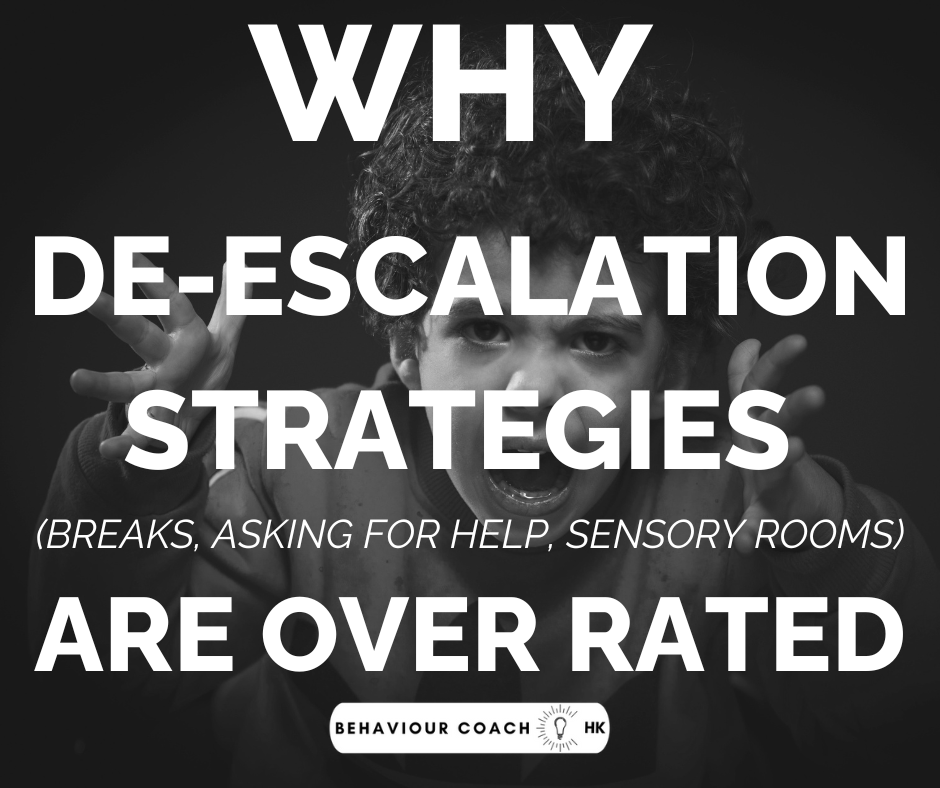
Behavioural challenges among children are an inevitable part of parenting and teaching. However, the prevailing approach of crisis management, which focuses on reacting to these challenges as they occur, is neither sustainable nor effective in the long run if we are relying solely on this practice. If we’re only focusing on crisis management, we’re going to be doing a lot of crisis management.
The Pitfall of Crisis Management
Crisis management, by definition, is a reactive approach to addressing behavioural issues. It involves dealing with concerning behaviour as it unfolds, often during or after an episode. While this approach can provide temporary relief, it doesn’t address the root causes of the behaviour. Instead, it treats the symptoms without tackling the unsolved problem. The longer that these unsolved problems are left untreated the greater the agitation response (concerning behaviour) as the pressure builds.
If we’re only teaching parents and teachers how to respond during or after a behavioural crisis, we’re inadvertently conveying to children that it’s acceptable to wait until things reach a breaking point before seeking help or making changes. This reactive mindset sets everyone involved up for a cycle of repeated crises and does little to empower children with essential proactive problem-solving skills.
The Importance of Proactive Teaching
Proactive teaching, on the other hand, focuses on equipping children with the skills to identify and address problems before they escalate into full-blown crises. This approach shifts the paradigm from reaction to prevention and empowers children to become active participants in managing their behaviour.
Consider this: Instead of waiting for a child to act out in frustration due to an unsolved problem, proactive teaching helps them recognize these issues before they reach a crisis point. It teaches them how to express their concerns, emotions, and needs effectively, reducing the likelihood of disruptive behaviour.
Reframing the “Ask for Help” Paradigm
One common piece of advice given to children is to “ask for help” when they’re struggling with something. While seeking help is undoubtedly a valuable skill, it’s often a late-stage solution to an already existing problem. By the time a child asks for help, an unsolved problem is already at hand.
Instead of solely emphasizing asking for help, we should focus on teaching children how to anticipate these problems. Most behavioural challenges are predictable, and by recognizing the signs and triggers, children can take proactive steps to prevent them from occurring.
The Predictability of Children’s Behaviour
Contrary to the belief that children’s behaviour is entirely unpredictable, it’s often highly patterned and predictable. Kids have their unique ways of responding to stressors, frustrations, and unmet expectations. By understanding these patterns, parents and teachers can help children identify their own behavioural triggers and work collaboratively to address them.
For instance, if a child consistently becomes anxious before a test, the anxiety itself is predictable. By teaching the child stress-reduction techniques, we can help them manage their anxiety before it leads to disruptive behaviour in the classroom.
CPS: A Proactive Approach to Sustainable Change
Collaborative & Proactive Solutions (CPS) is an evidence-based model that embodies the proactive approach to behaviour management. It centres on identifying and resolving unsolved problems, thus preventing behavioural crises from occurring. CPS recognizes that children’s behaviour is a form of communication, often indicating unmet expectations or difficulties.
Through CPS, parents and teachers work together with children to understand their concerns, viewpoints, and triggers. This collaborative effort allows for the development of realistic, mutually satisfactory solutions that address everyone’s concerns. By solving problems proactively, CPS empowers children with crucial skills like communication, adaptability, and problem-solving.
In Conclusion
While behavioural crises will always be a part of parenting and teaching, solely relying on crisis management is neither sustainable nor effective. Proactive teaching, as exemplified by the CPS approach, is the key to breaking the cycle of crisis and creating lasting behaviour improvements. By empowering children with the skills to identify and address problems before they escalate, we pave the way for a brighter and more harmonious future.
Sources
- Greene, Dr. Ross., host. “The CPS Podcast: De-escalation is not Crisis Prevention.”, 05 Sep. 2023. https://www.blogtalkradio.com/dr-ross-greene/2023/09/05/the-cps-podcast-de-escalation-is-not-crisis-prevention